A Food Lover's Guide to Bhutanese Cuisine
Bhutanese cuisine might be one of the world's most underappreciated culinary traditions. Shaped by high-altitude geography, Buddhist culture, and a genuine love of chilies that makes most other "spicy" cuisines seem mild, Bhutanese food offers adventurous travelers an experience as memorable as any monastery or mountain view. Understanding what to expect—and what to try—enriches your journey through the Land of the Thunder Dragon.
The Foundations of Bhutanese Cooking
Chilies: A Food Group
Unlike most cuisines where chilies are a condiment or spice, Bhutanese cooking treats them as a vegetable. Fresh green chilies, dried red chilies, and chili powder appear in almost every dish, not merely for heat but for their fruity, complex flavors.
For Bhutanese people, a meal without chilies feels incomplete—like eating without salt. The saying goes that Bhutanese don't consider something "food" unless it's spicy enough to make you sweat. While this can challenge unaccustomed palates, the depth of flavor beneath the heat rewards those who adapt.
Red Rice
Bhutan's staple grain is red rice, a semi-milled, nutty variety that turns pink when cooked. Grown primarily in the fertile Paro and Punakha valleys, red rice offers higher nutritional value than white rice and a distinctive earthy flavor. It accompanies virtually every meal, providing a subtle base that balances the aggressive flavors of chili-heavy dishes.
Cheese (Datshi)
Cheese plays a central role in Bhutanese cooking, particularly in the ubiquitous "datshi" dishes. Unlike aged European cheeses, Bhutanese cheese is typically fresh, soft, and mild—similar to queso fresco or farmer's cheese. Made from cow, yak, or mixed milk depending on region and season, it creates creamy sauces that soothe the chili heat.
Buddhist Influences
Bhutan's Buddhist heritage shapes food culture in subtle ways:
- Limited Meat: While not vegetarian, Bhutanese consume less meat than many cultures, and slaughter contradicts Buddhist teachings
- Imported Meat: Most meat is imported from India to avoid taking life within Bhutan
- Seasonal Eating: Traditional diets follow agricultural cycles
- Gratitude: Meals begin with appreciation for the food and those who provided it
Must-Try National Dishes
Ema Datshi: The National Dish
A simple yet addictive preparation of chilies (ema) stewed in cheese sauce (datshi). The green or red chilies are barely cooked, retaining their crunch and heat, while the cheese creates a creamy, slightly oily sauce. Variations include:
- Kewa Datshi: Potatoes and cheese (a gentler introduction)
- Shamu Datshi: Mushrooms and cheese
- Mixed Datshi: Combination of vegetables with cheese
The trick to enjoying ema datshi is accepting the heat rather than fighting it. After a few bites, the endorphins kick in, and many visitors find themselves craving it despite initial shock.
Phaksha Paa
Pork strips (phaksha) cooked with red chilies, radish, and sometimes dried river stones that impart a unique smoky flavor. This hearty dish exemplifies Bhutanese meat preparation—intensely flavored, moderately spiced, and perfect with red rice. The pork fat balances the chili heat while adding richness.
Jasha Maru
Chicken (jasha) stewed with tomatoes, ginger, garlic, and chilies until tender. Less cheese-based than datshi dishes, jasha maru features a more tomato-forward sauce that might feel familiar to international palates, though still definitively Bhutanese in its spice level.
Momos
These Tibetan-style dumplings appear throughout Bhutan in various forms:
- Khabzey: Fried bread pieces often enjoyed with butter tea
- Beef/Pork Momos: Steamed dumplings filled with spiced ground meat
- Vegetable Momos: Cabbage, cheese, and potato fillings for vegetarian options
- Fried Momos: Crispy exteriors reveal succulent fillings
While not originally Bhutanese, momos have been thoroughly adopted and appear everywhere from farmhouse meals to hotel menus.
Hoentay
A specialty of the Haa Valley—buckwheat dumplings filled with turnip greens, cheese, and sometimes spinach. These crescent-shaped parcels are steamed then sometimes pan-fried, offering earthy, satisfying flavors that showcase Bhutan's buckwheat tradition.
Puta
Buckwheat noodles served in a flavorful soup or stir-fried with vegetables. Particularly popular in eastern Bhutan, puta demonstrates the importance of buckwheat in high-altitude agriculture where wheat doesn't thrive.
Regional Specialties
Western Bhutan (Paro, Thimphu, Punakha)
The agricultural heartland produces:
- Ara: Traditional grain alcohol distilled from rice, wheat, or barley
- Ezay: Spicy chili paste condiments that make regular dishes seem mild
- River Fish: From Punakha's rivers, prepared with vegetables and chilies
Central Bhutan (Bumthang)
Known for:
- Bumthang Cheese: Firmer, more aged varieties than western cheese
- Honey: Wild honey harvesting produces complex, aromatic varieties
- Buckwheat Specialties: Pancakes, noodles, and dumplings feature prominently
- Bumthang Brewery Products: Local beer production
Eastern Bhutan
Distinct flavors include:
- Shukam: Dried meat preserved for winter
- Trashi Yangtse Wooden Bowls: While not food, these bowls are prized for serving
- Churpi: Hard dried cheese chewed like candy or added to soups
- Matsutake Mushrooms: Seasonal delicacy (July-September) highly valued
Beverages
Suja (Butter Tea)
This Tibetan-influenced beverage combines tea, butter, and salt, churned until creamy. Suja is an acquired taste—savory rather than sweet, with a texture between tea and soup. It's offered as hospitality throughout Bhutan, especially in villages and monasteries.
The trick is accepting it as soup rather than expecting tea. The butter and salt provide calories and minerals crucial for high-altitude life, and the warmth is welcome in cold climates.
Ngaja (Sweet Tea)
For those who can't adapt to butter tea, sweet milk tea offers familiar comfort. Made with black tea, milk, and plenty of sugar, ngaja appears in every restaurant and home.
Ara and Bangchang
Ara: Distilled spirits made from fermented grains, ranging from smooth to paint-thinner-harsh depending on quality and distillation skill. Often homemade in villages.
Bangchang: Fermented grain alcohol drunk through a bamboo straw from a vessel of fermented millet or wheat. The grains are topped with hot water, creating a mildly alcoholic, slightly sour beverage central to social gatherings.
Beer
Bhutan produces several good beers:
- Druk 11000: Named for Bhutan's highest peak, a lager widely available
- Red Panda: Wheat beer with smooth character
- Bumthang Brewery: Various specialty beers from the Bumthang region
Practical Eating Advice
Managing the Heat
Strategies for chili novices:
- Request "Less Spicy": Your guide can communicate this, though "less spicy" remains fairly hot by most standards
- Eat Rice: Red rice absorbs heat; take big bites of rice with small bites of spicy dishes
- Dairy Helps: Cheese sauces, milk tea, and yogurt soothe burning better than water
- Gradual Adaptation: Start with milder dishes (kewa datshi) and build tolerance
- Embrace It: After a few days, many visitors find themselves craving the heat
Dining Etiquette
- Eat with right hand: Though utensils are common, traditional eating uses the right hand
- Don't waste food: Take small portions rather than leaving food uneaten
- Compliment the cook: Expressing appreciation for meals shows respect
- Tea acceptance: Refusing butter tea may offend; take at least a sip
- Slow pace: Meals are social times, not rushed
Common Meal Structure
Breakfast: Often simple—tea, bread or rice, sometimes eggs, occasionally leftovers from dinner
Lunch: The main meal, typically including rice, datshi dish, vegetable preparation, and possibly meat
Dinner: Similar to lunch but lighter, usually eaten early (6-7 PM)
Restaurant Dining vs. Home Cooking
Hotel and tourist restaurant food is typically:
- Less spicy than authentic home cooking
- More varied to suit international palates
- Well-prepared but sometimes less authentic
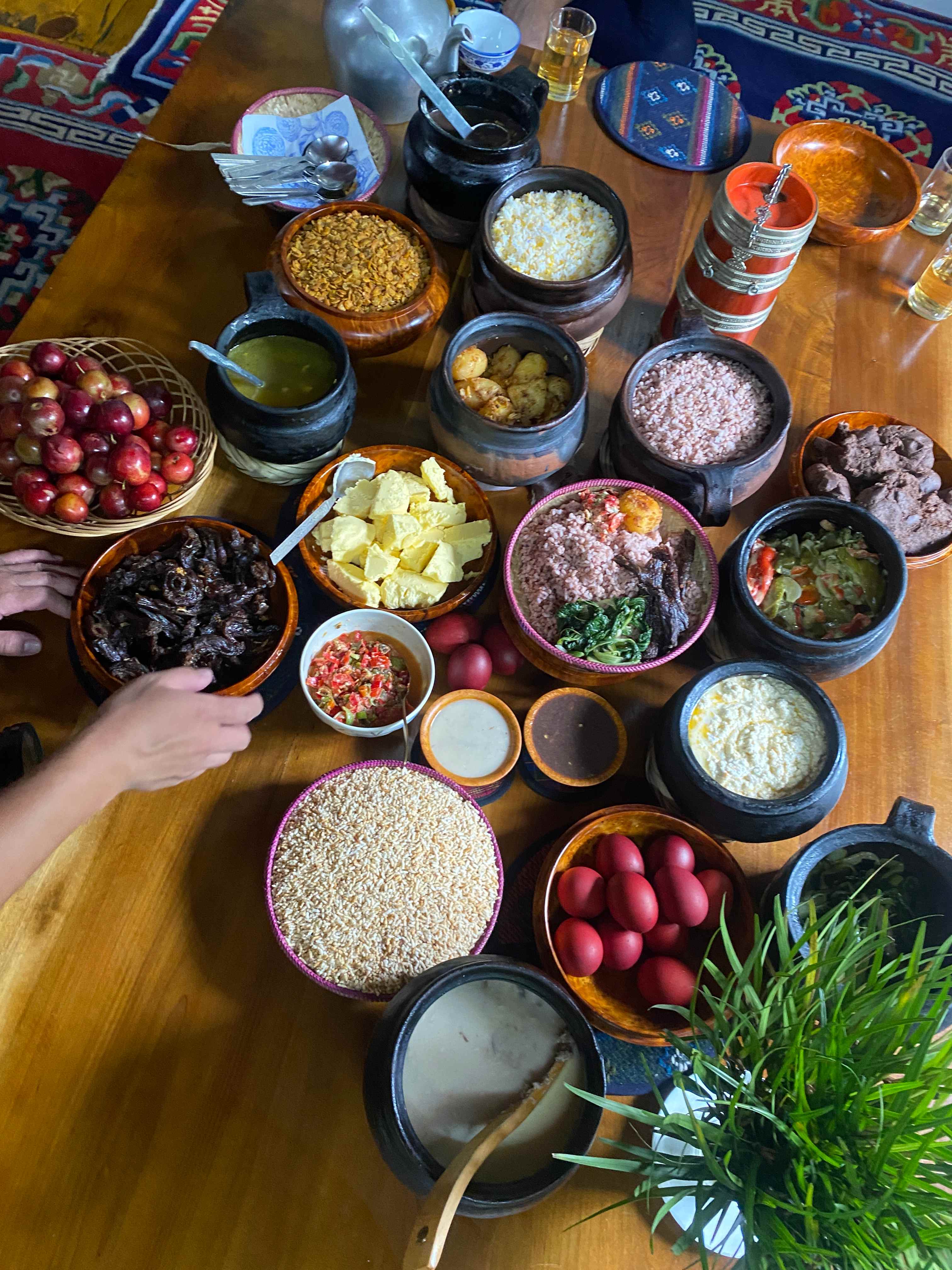
If invited to a local home or staying in homestays, expect:
- Simpler but more authentic preparations
- Spicier food reflecting real Bhutanese tastes
- Traditional serving style with multiple small bowls
- Genuine hospitality and generous portions
Vegetarian and Dietary Restrictions
Bhutan accommodates vegetarians relatively easily, though vegans face more challenges due to the prevalence of dairy. Inform your tour operator about dietary restrictions when booking, and remind your guide throughout your journey.
Vegetarian Options: Plentiful vegetable datshi dishes, rice, noodles, and momos make vegetarianism manageable
Vegan Challenges: Butter tea, cheese-based dishes, and dairy prevalence require careful ordering
Gluten-Free: Rice-based diet helps, though soy sauce and wheat noodles appear in some dishes
Allergies: Communicate clearly through your guide; remote areas have limited alternatives
Unique Ingredients
Churpi
Dried hard cheese that can be stored for months or years. Churpi comes in soft and hard varieties—soft versions are added to soups and stews, while hard churpi is chewed like candy (a common snack for herders spending days in the mountains).
Dried Meat (Shakam and Kamdo)
Preserved through drying, these meats provide protein through winter months:
- Shakam: Dried beef strips
- Kamdo: Dried pork
Both are rehydrated through cooking with vegetables and chilies, creating intensely flavored stews.
Wild Ferns and Greens
Spring brings wild edibles like fiddlehead ferns, nettle, and various greens foraged from forests. These seasonal vegetables add variety to the diet and represent traditional food knowledge passed through generations.
Ezay (Chili Paste)
While all food is spicy, ezay condiments take heat to another level. Made from fresh or dried chilies with tomato, cheese, or other ingredients, ezay sits on tables like salt and pepper, ready to amplify any dish.
Food Experiences to Seek Out
Farmhouse Dinner
Arrange through your guide to share a meal at a traditional farmhouse. Sitting on cushions around a bukhari (wood stove), eating from wooden bowls, and conversing with farming families creates unforgettable cultural connection.
Hot Stone Bath with Dinner
After soaking in a traditional hot stone bath (dotsho), enjoy a home-cooked meal—often the best food of your trip. Many farmstays and boutique hotels offer this combination.
Local Market Visits
Weekend markets in Thimphu and towns throughout Bhutan display fresh produce, dried goods, and local specialties. Your guide can explain unfamiliar ingredients and their uses.
Cooking Class
Several hotels and tour operators arrange cooking lessons where you prepare classic dishes like ema datshi, momos, and red rice. Taking these skills home extends your Bhutanese experience.
Festival Food
During tshechus and celebrations, festival grounds fill with food stalls selling:
- Fresh momos steamed on-site
- Tea (butter and sweet)
- Snacks like khabzey (fried bread)
- Local sweets and treats
Families also bring elaborate picnics, spreading carpets and sharing food while watching masked dances—a highlight of festival attendance.
The Bottom Line
Bhutanese cuisine might challenge you with its heat and unfamiliar flavors, but it rewards openness with memorable tastes deeply connected to landscape and culture. The chilies that dominate every plate grow from Bhutanese soil; the red rice is harvested from nearby terraces; the cheese comes from yaks grazing mountain pastures visible from your window.
This direct connection between land and plate, between farming families and your meal, gives Bhutanese food an authenticity increasingly rare in globalized cuisine. Yes, it's spicy—very spicy—but beneath the heat lie complex, carefully developed flavors refined over centuries of mountain living.
Embrace the burn, request explanations, try everything at least once, and let Bhutanese food become another lens through which you understand this remarkable kingdom. By the end of your journey, you might find yourself craving ema datshi and red rice, the ultimate sign that Bhutan has worked its culinary magic on you.
Ready to explore Bhutan through its flavors? Contact Inscape Journeys to craft a journey that includes authentic culinary experiences, from farmhouse dinners to cooking classes, guided by locals who bring Bhutanese food culture to life.