Meet Bhutan's Master Artisans: Handicrafts and Traditional Arts
In the quiet workshops and bustling markets of Bhutan, artisans preserve centuries-old traditions through their skilled hands. From intricate thangka paintings that take months to complete to handwoven textiles bearing patterns passed down through generations, Bhutanese handicrafts represent more than beautiful objects—they embody cultural identity, spiritual devotion, and living heritage.
The Thirteen Traditional Arts and Crafts
Bhutan recognizes thirteen traditional art forms collectively known as "Zorig Chusum." Each requires years of apprenticeship to master, and together they encompass nearly every aspect of traditional Bhutanese material culture.
1. Thangka Painting (Lhazo)
These intricate scroll paintings depict Buddhist deities, mandalas, and religious scenes. Artists spend months on a single thangka, following strict iconographic rules while infusing each piece with spiritual intention. The finest thangkas use natural pigments ground from minerals and plants, applied with brushes made from animal hair.
2. Sculpture (Jinzo)
From massive monastery statues to tiny prayer wheels, Bhutanese sculptors work in clay, wood, and metal. The most sacred sculptures undergo elaborate consecration ceremonies, transforming them from art objects into vessels of spiritual power.
3. Wood Carving (Shingzo)
Walk through any dzong or traditional home, and you'll see the artistry of Bhutanese wood carvers. Intricate floral patterns, mythical creatures, and protective symbols adorn beams, windows, and doors. Master carvers can spend weeks on a single window frame, each cut precise and purposeful.
4. Painting (Lhazo)
Beyond thangkas, painters decorate walls, furniture, and architectural elements with vibrant designs. The bold colors and symbolic motifs of Bhutanese painting create visual harmony while conveying spiritual protection and auspicious meanings.
5. Bronze Casting (Lugzo)
Using the ancient lost-wax method, bronze casters create statues, ritual implements, and decorative objects. Each piece begins as a wax model, which is covered in clay, melted away, and replaced with molten bronze—a process unchanged for centuries.
6. Blacksmithing (Garzo)
Traditional blacksmiths forge everything from agricultural tools to ceremonial swords. The rhythmic ring of hammer on anvil still echoes through villages, though modern materials have supplemented traditional iron.
7. Jewelry Making (Trözo)
Bhutanese jewelry combines precious metals with coral, turquoise, and other semi-precious stones. Each piece follows traditional designs believed to bring protection and good fortune.
8. Bamboo and Cane Weaving (Tsharzö)
Weavers transform bamboo and cane into baskets, mats, hats, and containers. These practical items showcase both utility and artistry, with patterns varying by region and purpose.
9. Paper Making (Deshö)
Bhutanese paper, made from the bark of the daphne plant, has been produced for centuries. This durable, insect-resistant paper is used for sacred texts, official documents, and artistic purposes.
10. Masonry (Dözo)
Stone masons build without mortar, fitting stones together with precision that has lasted centuries. Their work forms the foundations of dzongs, temples, and traditional homes.
11. Weaving (Thagzo)
Perhaps the most celebrated Bhutanese art, weaving produces the intricate textiles for which Bhutan is famous. Weavers use backstrap looms to create complex patterns, some taking months to complete a single piece.
12. Embroidery (Tshemzö)
Skilled embroiderers create elaborate designs on clothing, wall hangings, and religious textiles. The finest embroidery uses silk threads to depict dragons, flowers, and auspicious symbols.
13. Appliqué (Lhemdrub)
This technique involves stitching fabric pieces onto a background to create images. Large appliqué thangkas adorn monastery walls during festivals, some measuring several stories tall.
The Weaving Tradition
Patterns That Tell Stories
Every woven pattern carries meaning. Some designs are reserved for royalty, others indicate regional origin or family heritage. The most complex patterns—like the legendary "kushithara"—can take skilled weavers six months to a year to complete.
The Backstrap Loom
Bhutanese weavers use traditional backstrap looms, with one end attached to a fixed post and the other to a strap around the weaver's back. This gives weavers precise control over tension, enabling them to create intricate patterns impossible on frame looms.
Natural Dyes
While chemical dyes are now common, some weavers still use natural dyes extracted from plants, minerals, and insects. These create softer, more nuanced colors that age beautifully.
Meeting the Artisans
Thimphu's Craft Markets
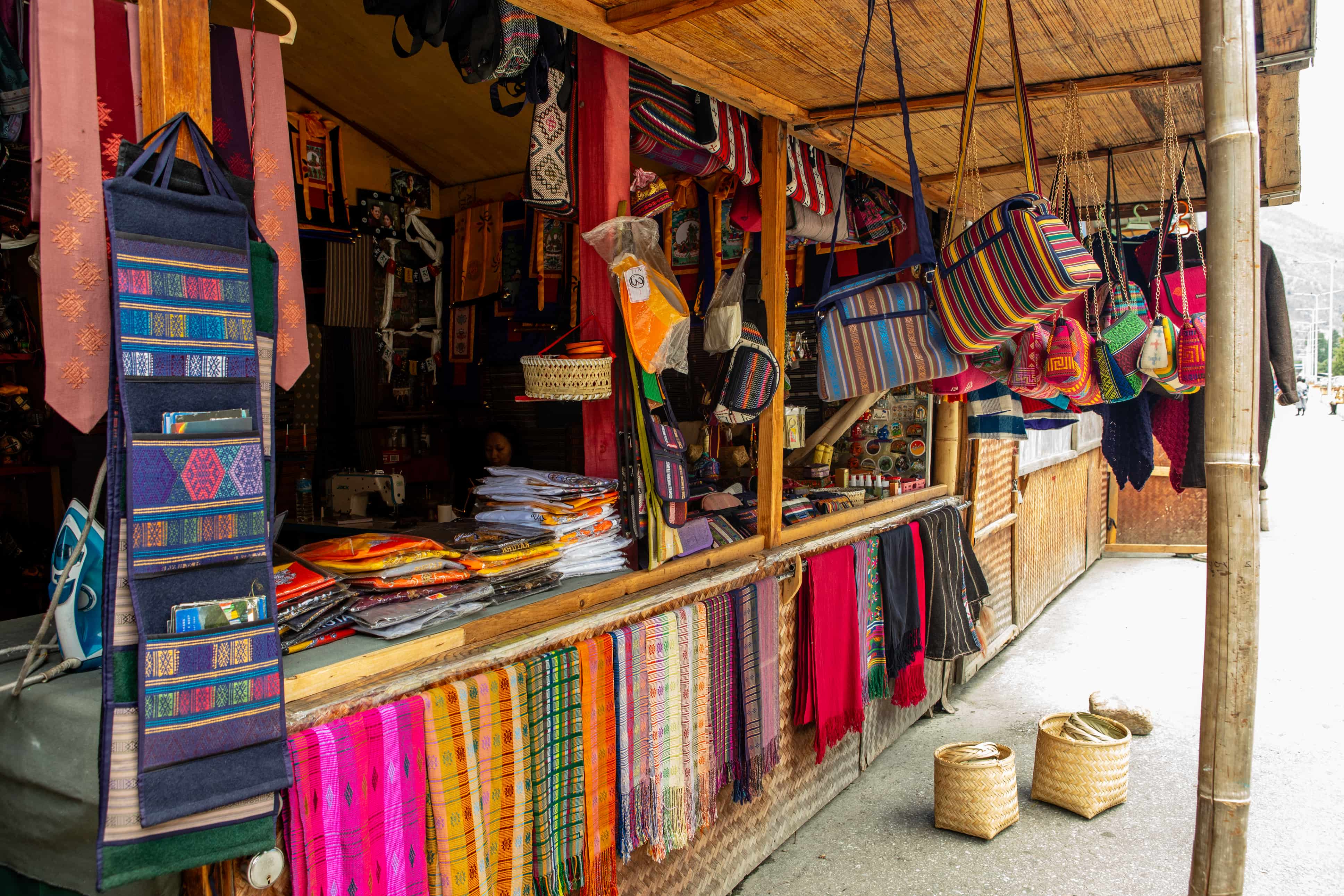
The Weekend Market in Thimphu brings together artisans from across Bhutan. Here you can watch weavers demonstrate their craft, see painters creating thangkas, and purchase directly from makers. The atmosphere is friendly, and artisans often welcome questions about their work.
Rural Workshops
In villages throughout Bhutan, artisans work in small home workshops. Visiting these workshops offers insight into the patient, meditative process of traditional crafts. Many artisans are happy to demonstrate their techniques for interested visitors.
The National Institute for Zorig Chusum
This school in Thimphu trains young Bhutanese in traditional arts. Visitors can observe students learning ancient techniques, ensuring these skills pass to future generations.
The Economics of Traditional Crafts
Challenges
Modern life presents challenges for traditional artisans. Factory-made goods are cheaper and faster to produce. Young people often prefer other careers. The time-intensive nature of traditional crafts makes them expensive, limiting markets.
Preservation Efforts
The Bhutanese government actively supports traditional arts through education, subsidies, and tourism promotion. The requirement that all buildings follow traditional architectural styles ensures continued demand for skilled artisans.
Fair Trade and Sustainability
Several organizations work to connect Bhutanese artisans with international markets while ensuring fair compensation. When you purchase authentic Bhutanese handicrafts, you support not just individual artisans but the preservation of cultural heritage.
Shopping for Authentic Crafts
What to Look For
Quality Indicators:
- Handmade irregularities (perfect uniformity suggests machine production)
- Natural fiber texture in textiles
- Complexity of patterns
- Quality of materials (silk vs. synthetic)
- Artist signatures or stamps on paintings
Price Expectations
Authentic handcrafted items command premium prices reflecting the time and skill invested:
- Simple woven scarves: $30-100
- Complex gho or kira fabrics: $200-1,000+
- Small thangka paintings: $100-500
- Master-level thangkas: $1,000-10,000+
- Wooden handicrafts: $20-200
- Bronze statues: $100-several thousand
Certificates of Authenticity
For expensive pieces, request documentation certifying the work as authentic Bhutanese handicraft. This is especially important for thangkas and complex weavings.
Learning from Artisans
Workshop Experiences
Many tour operators can arrange workshops where visitors learn basic techniques:
- Trying the backstrap loom
- Creating simple thangka sketches
- Working with clay sculptures
- Paper making from daphne bark
- Basic wood carving
These hands-on experiences deepen appreciation for the skill required and create meaningful connections with artisans.
The Spiritual Dimension
For Bhutanese artisans, their work often carries spiritual significance. Creating religious art is an act of devotion. Many artisans begin work with prayers, maintain ritual purity during creation, and view their craft as a path to merit.
Supporting Traditional Arts
How Your Visit Helps
When you visit Bhutan and purchase authentic handicrafts:
- You provide income for artisans and their families
- You encourage young people to learn traditional skills
- You help preserve endangered art forms
- You take home meaningful souvenirs with genuine cultural value
Beyond Purchases
Even if you don't buy, showing interest in traditional crafts validates their importance. Asking questions, watching demonstrations, and expressing appreciation encourages artisans to continue their work.
Regional Specialties
Different regions of Bhutan specialize in particular crafts:
- Khoma and Lhuentse: Famous for weaving, especially kishuthara patterns
- Trashiyangtse: Known for wooden bowls and lacquerware
- Paro: Traditional thangka painting
- Zhemgang: Bamboo and cane work
- Bumthang: Yathra wool weaving
The Future of Bhutanese Handicrafts
As Bhutan balances modernization with tradition, handicrafts face both challenges and opportunities. Tourism brings appreciation and income. Government support ensures training continues. Young artisans experiment with traditional techniques in contemporary designs.
The key lies in respecting the depth of these traditions while allowing them to evolve. The same patient precision that created monastery treasures centuries ago continues in workshops today, connecting past and present through the skilled hands of Bhutan's artisans.
Visiting Artisan Workshops
When visiting artisan workshops:
- Photography is usually allowed, but always ask first
- Don't touch works in progress without permission
- Understand that artisans may be concentrating deeply
- If you're not buying, a small donation is appreciated
- Engage with genuine interest—artisans love sharing their craft
Want to meet Bhutanese artisans and explore traditional crafts? We can arrange workshop visits, craft demonstrations, and opportunities to purchase authentic handicrafts directly from makers during your journey.