Life Inside a Bhutanese Monastery: A Day with the Monks
As dawn breaks over Bhutan's mountains, the deep resonance of dungchen horns echoes through monastery courtyards. Monks emerge from their quarters, wrap their maroon robes against the cold, and make their way to morning prayers. For these dedicated practitioners, this moment marks the beginning of another day devoted to spiritual practice, study, and service—a rhythm of life unchanged for centuries.
The Monastic Life: An Overview
Bhutan remains one of the world's few countries where monasticism thrives as a living tradition. Approximately 1 in 12 Bhutanese men will spend at least some time as a monk, and many dedicate their entire lives to spiritual practice. Monasteries aren't museums or tourist attractions—they're vibrant communities where Buddhism is lived, studied, and practiced daily.
Entering the Monastic Path
Becoming a Monk
Most Bhutanese monks begin their journey between ages 8 and 12, though some enter as young as 6. Families consider it an honor to have a son become a monk, viewing it as accumulating merit for the entire family. The decision may come from:
- Religious devotion of parents
- Family tradition (especially for second or third sons)
- The child's own inclination toward spiritual life
- Economic factors (monasteries provide education and care)
Ordination Ceremony
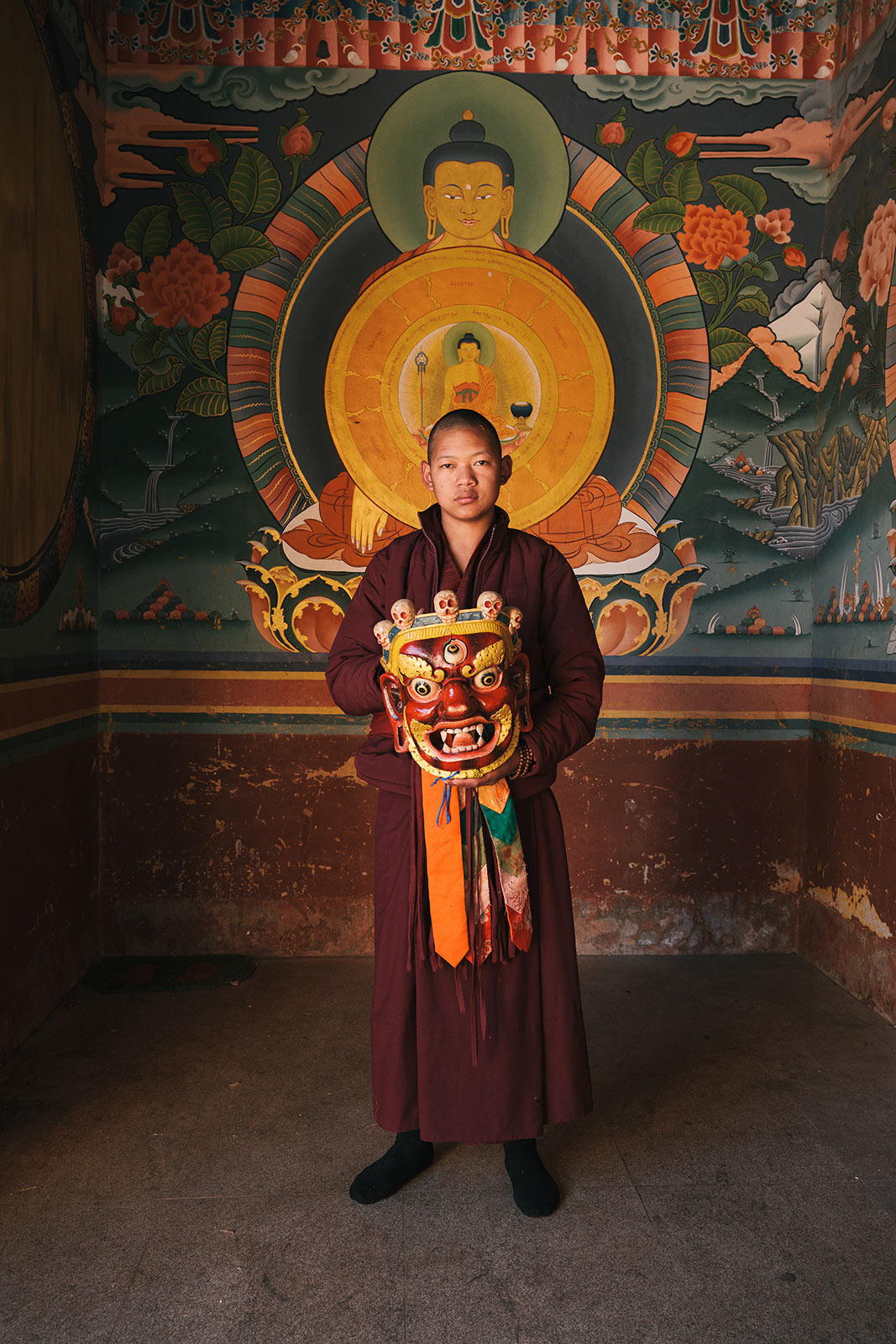
The formal entry into monastic life involves a ceremony where the novice takes vows, has their head shaved, and receives their robes. Family and community members attend, marking this significant life transition with prayers, offerings, and celebrations.
Early Years
Young monks begin with basic education—reading, writing, memorizing prayers and scriptures. They learn monastery etiquette, ritual procedures, and the fundamentals of Buddhist philosophy. Older monks serve as teachers and mentors, guiding novices through early challenges of monastic life.
A Day in the Monastery
Pre-Dawn (4:30-5:30 AM)
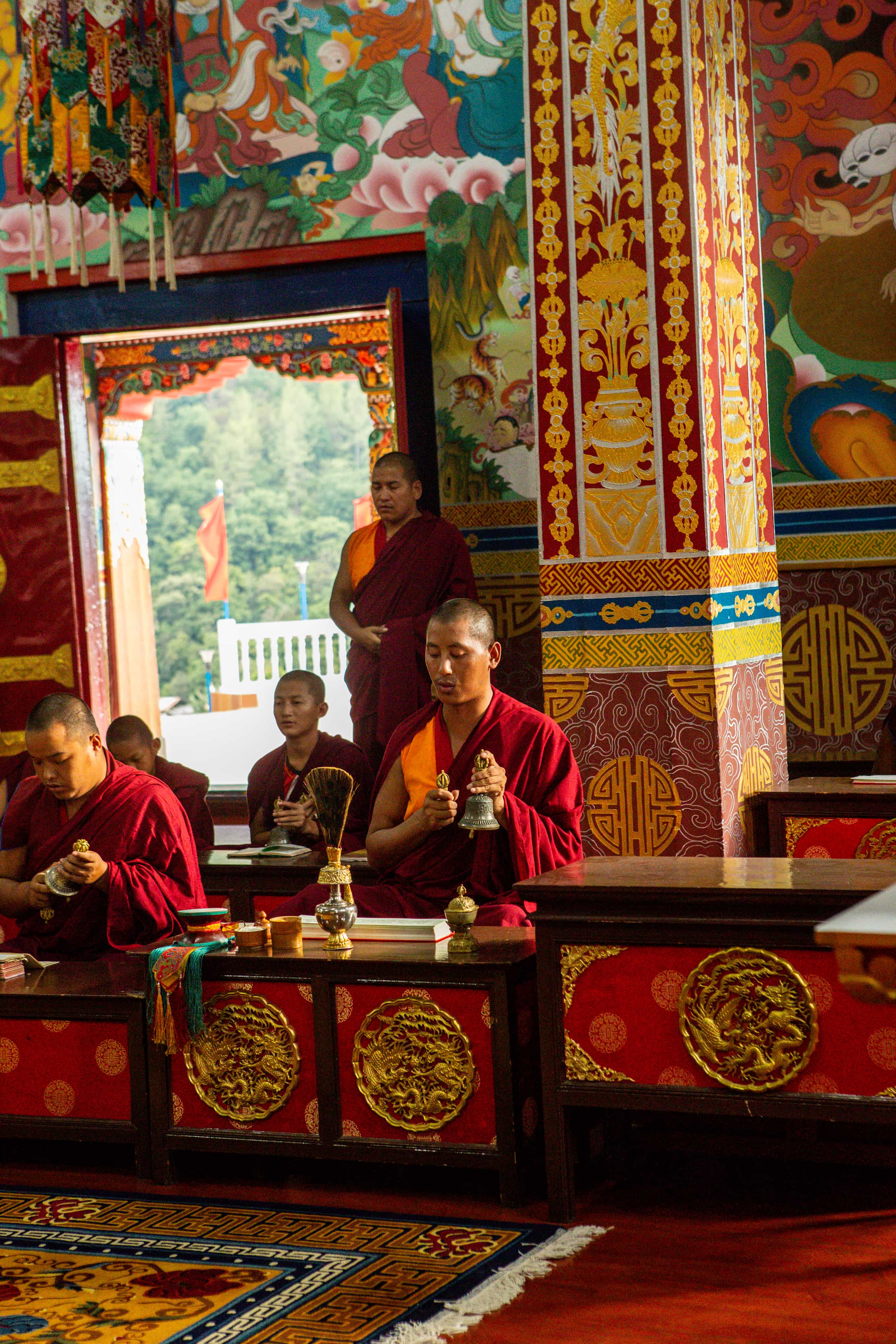
The day begins before sunrise. Monks wake to the sound of bells and drums, quickly dress in the cold morning air, and assemble in the main temple. Morning prayers last 1-2 hours, filling the dimly lit hall with the deep chanting of sutras, punctuated by cymbals, drums, and horns.
Morning Prayer Offerings:
- Water bowls arranged before altar statues
- Butter lamps lit to dispel darkness
- Incense burned to purify the space
- Ritual cakes (torma) arranged as offerings
- Prayers for the benefit of all sentient beings
Breakfast (6:30-7:30 AM)
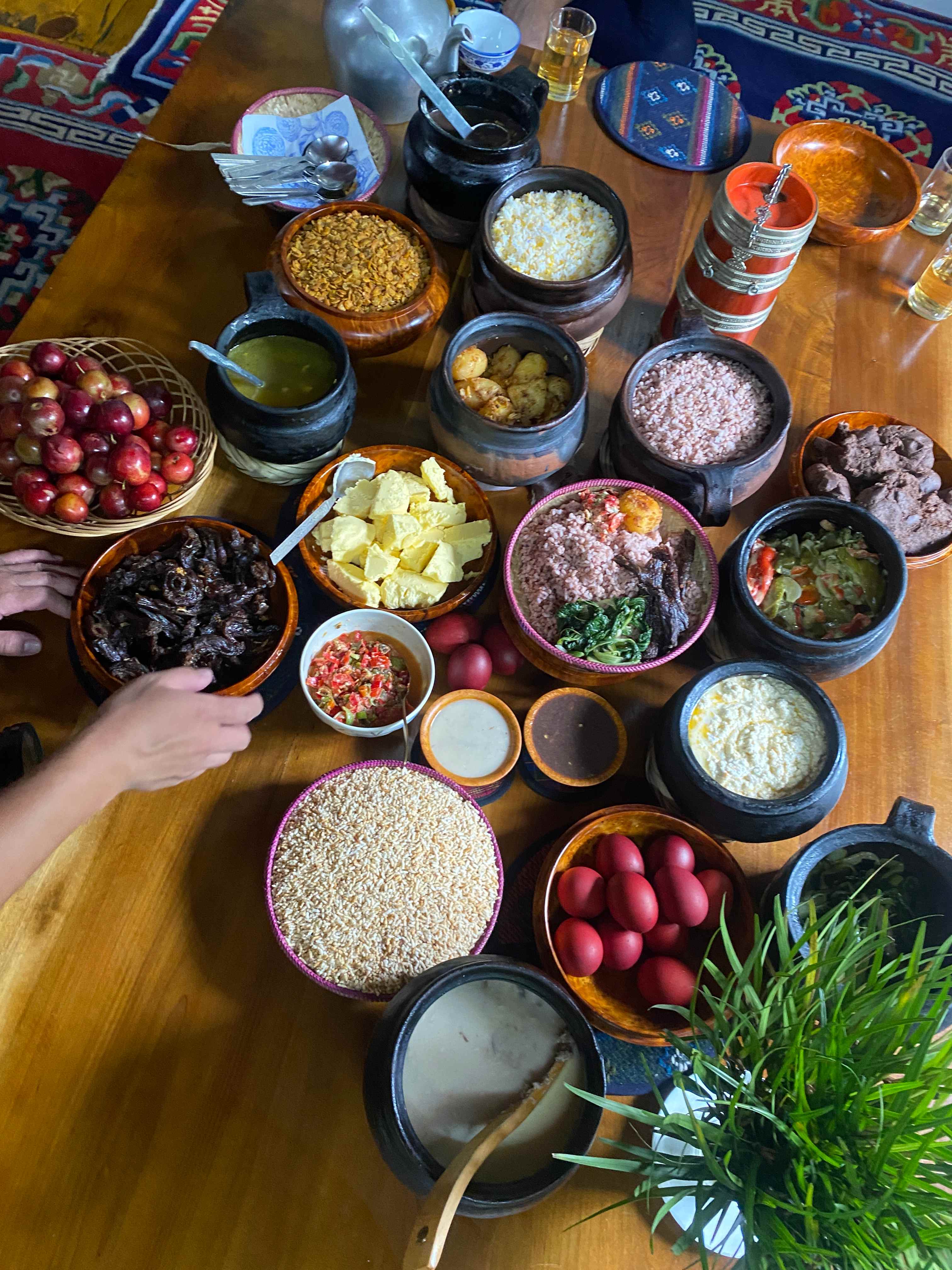
After prayers, monks gather for a simple breakfast, typically:
- Red rice with butter tea (suja)
- Occasionally ema datshi (chili and cheese)
- Leftovers from the previous day's meals
- Seasonal fruits when available
Young monks serve food to elders first, demonstrating monastic hierarchy and respect. Meals are eaten mindfully, often in relative silence.
Study and Classes (8:00 AM-12:00 PM)
The morning is devoted to study. Depending on age and progress:
Younger Monks (8-15 years):
- Basic education: Dzongkha (Bhutanese language), English, mathematics
- Scripture memorization
- Ritual training
- Buddhist philosophy introduction
Intermediate Students (15-20 years):
- Deeper Buddhist philosophy
- Debate practice
- Advanced ritual procedures
- Traditional arts (painting, sculpture, music)
- English and modern subjects
Advanced Monks (20+ years):
- Specialized Buddhist studies
- Teaching responsibilities
- Leadership training
- Meditation practice
- Administrative duties
Midday Meal (12:00-1:00 PM)
The main meal of the day arrives at noon:
- Rice as the staple
- Vegetable curries
- Sometimes meat (though many monasteries are vegetarian)
- More butter tea
- Occasional desserts during festivals
This is the last substantial meal; only tea and light snacks are permitted in the evening.
Afternoon Activities (1:00-5:00 PM)
Afternoons vary by monastery and individual:
- Continued study and memorization
- Debate practice (often outdoors in monastery courtyards)
- Ritual practice and music lessons
- Personal meditation
- Monastery maintenance
- Training in traditional arts
- Teaching younger monks
Debate Practice
Buddhist philosophical debate forms a crucial part of monastic education. Monks pair off, one standing (the challenger) asking increasingly complex philosophical questions, while the seated monk must defend positions using logic and scriptural authority. The challenger punctuates questions with dramatic hand claps and stomping, creating a dynamic, engaging learning method.
Evening Prayers (5:00-7:00 PM)
As daylight fades, monks gather again for evening prayers. These tend to be shorter than morning sessions but equally important, concluding the day's formal spiritual practice. Special pujas (ritual ceremonies) may extend the evening schedule.
Evening (7:00 PM-9:00 PM)
The time before sleep varies:
- Personal study and reading
- Meditation practice
- Socializing with fellow monks
- Tea and light conversation
- Personal religious practice
Lights Out (9:00-10:00 PM)
Most monasteries maintain discipline about sleep schedules. Monks retire relatively early, preparing for the next pre-dawn wake-up. Monks typically sleep in shared dormitories, though senior monks may have private rooms.
Specialized Roles Within the Monastery
The Abbot (Je Khenpo for national monasteries)
The senior spiritual leader makes major decisions, provides teachings, and maintains monastery tradition. Becoming an abbot requires decades of study, practice, and demonstration of wisdom.
Disciplinarian (Khenpo)
Maintains order, enforces rules, and oversees the training of younger monks. This role requires firmness balanced with compassion.
Chant Master (Umzey)
Leads prayers and rituals, maintaining proper liturgical traditions. Must have excellent memory and understanding of complex ceremonies.
Ritual Musicians
Trained in playing traditional instruments:
- Dungchen (long horns)
- Cymbals and drums
- Conch shells
- Hand bells (drilbu)
Administrators
Handle practical matters—finances, supplies, maintenance, communication with patrons and government.
Teachers
Senior monks responsible for educating and mentoring novices and intermediate students.
Festivals and Special Occasions
Tshechus and Other Festivals
During major religious festivals, monastic life intensifies. Monks:
- Perform elaborate masked dances (cham)
- Conduct extended rituals
- Display sacred thangkas
- Provide blessings to laypeople
- Create intricate sand mandalas
Preparation for major festivals can take months, with monks rehearsing dances, preparing costumes, and organizing complex ceremonies.
Personal Practice Retreats
Advanced monks may enter extended retreats:
- Three-year, three-month, three-day retreat (traditional duration)
- Solitary meditation in remote caves or hermitages
- Specialized practice of specific deities or teachings
- Some monks remain in retreat for life
Monastery Support and Economy
Patronage System
Monasteries rely on support from:
- Government subsidies
- Wealthy patrons
- Community donations
- Income from monastery properties
- Offerings during religious ceremonies
Monks and Laity
The relationship between monks and lay community is reciprocal:
- Laypeople provide material support
- Monks provide spiritual services, blessings, prayers
- Monks perform death rituals and prayers for the deceased
- Monasteries host festivals and ceremonies for community benefit
Challenges of Monastic Life
Physical Hardships
Monastic life involves real challenges:
- Cold buildings in winter (Bhutan has no central heating)
- Simple food and limited variety
- Rigid schedules and discipline
- Long hours of study and memorization
- Physical discomfort during extended prayer sessions
Personal Sacrifices
Monks give up:
- Family life and marriage
- Personal wealth and possessions
- Freedom of movement and choice
- Secular careers and opportunities
- Many worldly pleasures
Modern Tensions
Contemporary monks navigate tensions between tradition and modernity:
- Access to smartphones and internet
- Exposure to secular education and ideas
- Opportunities outside monastic life
- Maintaining discipline in a changing world
The Decision to Leave
Not all monks remain for life. Many young men spend years in monasteries before disrobing and returning to lay life. This is generally accepted, though those who stay longer face greater family and social expectations to continue.
Women in Bhutanese Buddhism
While male monasticism receives more attention, Bhutan also has ani (nuns) who follow similar practices. Nunneries generally have fewer resources and less prestige than monasteries, though this is slowly changing with government and private support.
Visiting Monasteries Respectfully
When visiting Bhutanese monasteries, remember you're entering sacred, living spaces:
Dress Appropriately
- Cover shoulders and knees
- Remove hats and sunglasses inside
- Remove shoes before entering temples
Behavior Guidelines
- Speak quietly
- Don't point feet toward statues or monks
- Walk clockwise around religious objects
- Ask before photographing
- Don't touch religious objects without permission
- Turn off phone ringers
Engaging with Monks
- Monks are generally friendly but maintain respect
- Young monks especially may be curious about visitors
- Don't interrupt prayers or studies
- Small donations are appreciated but not required
- Follow your guide's lead on appropriate interactions
The Spiritual Dimension
Beyond the daily routine and rules, monastic life centers on spiritual transformation. Monks dedicate themselves to:
- Understanding the nature of reality
- Developing compassion for all beings
- Overcoming negative mental patterns
- Achieving spiritual realization
- Benefiting others through prayer and practice
This commitment to something beyond self gives monastic life its deeper meaning and sustains monks through difficulties.
The Future of Monastic Life in Bhutan
As Bhutan modernizes, monasticism faces challenges:
- Fewer families sending children to monasteries
- Attraction of secular education and careers
- Influence of global culture and technology
Yet monasticism remains vital to Bhutanese identity. The government supports monasteries, families maintain respect for monastic life, and young Bhutanese continue choosing this path. The sight of maroon-robed monks walking Thimphu streets or chanting in ancient temples reassures Bhutanese that their spiritual heritage continues.
Understanding Through Experience
Reading about monastic life provides information, but witnessing it transforms understanding into experience. The deep sound of morning prayers, the sight of young monks practicing debate, the peaceful presence of elderly monks who've spent decades in practice—these create impressions that linger long after you leave Bhutan.
Interested in visiting monasteries and learning about Buddhist practice during your journey? We can arrange monastery visits, opportunities to witness morning prayers, and conversations with English-speaking monks willing to share their experiences.